
Besides the pandemic that resulted in higher interest rates, the default by Future Retail has dealt a blow to investor sentiment.
.jpg)
Q1 results indicate more pain ahead, as slowdown has spread to more sectors, pricing power has come down and rising interest cost is eating into profits.

India Inc's order-books swelled to Rs 37,666 crore (Rs 376.66 billion) in the first quarter of the financial year 2008-2009, up 93 per cent from Rs 19,520 crore (Rs 195.2 billion) for the same period last year. In the fourth quarter of 2007-08, the order-book had increased by 121 per cent to Rs 42,545 crore

The employees, who took part in this study, agreed that monetary transaction at 39.2 per cent is the most prevalent form of corruption.

It also issued notice to chairman of Sudarshan News, Suresh Chavhanke, Odisha Television Limited, Pittie Media LLP, Bharat Prakashan (Delhi) Limited which is the owner of The Organiser, Voice of the Nation'.

Capex plans for the next six months imply a 20 per cent increase in calendar 2010.

Several fiscal and monetary incentives since December 2008 helped the industry to recover into a growth trajectory. The 10 per cent plus growth in manufacturing, basic goods, mining, electricity has been buoyed by these measures, Confederation of Indian Industry said.

Prime Minister Narendra Modi on Wednesday said that the country's economic growth is picking up pace again and the domestic industry needs to enhance its risk-taking appetite. Noting the recent reforms taken by the government, the Prime Minister said that bringing reforms is a matter of conviction for his government, which is ready to take all risks in the national interest. "We have taken bold decisions. Reforms continued even during pandemic. "The government is doing reforms not out of compulsion but out of conviction," he said while addressing the CII's annual meeting.

India Inc has too much on its plate to ensure double digit growth in FY16.

India Inc on Friday expressed the hope that the robust 17.6-per cent industrial growth in April will help the economy grow by 8.5 per cent in this fiscal, even though factory output growth may moderate after June.
A survey showed as much as 95 per cent of CEOs and MDs were against Sebi's mandatory guidelines the company's to declare their quarterly performance, Assocham said in a statement.
Companies with no or little debt account for three-fourths of m-cap of BSE 200, excluding financial firms.
Even the best of government policies rarely satisfy the corporate sector. So, it is perhaps surprising that the year 2006 saw a scheme over which all business houses -- big and small alike -- were falling head over heels.
Operating margins improve, but sales still sluggish
According to a mid-year survey on 'Performance & Reward Trends' by Hewitt Associates, companies across industries are strongly differentiating rewards on the basis of performance but majority of them are not considering any layoffs or severe salary cuts in current fiscal. The survey revealed that 16 per cent of the companies surveyed have a salary freeze and were mainly organizations in the financial services, IT and ITeS sector.

India Inc has raised a whopping Rs 237.3 billion (Rs 23,730 crore) through initial share sales in April-January, which is nearly 10 times than that mobilised during the corresponding period last fiscal.
The Mumbai-based Arch Pharma has raised $27 million from private equity funding in the last four years

As per Hewitt's annual Salary Increase Survey 2009-10, the double-digit hike in salaries are anticipated for this year led by sectors like telecom, engineering, pharma and energy.

'Being financially independent is crucial.' 'This spares women a lot of grief if the marriage, especially in large business families, breaks down.'
India Inc has projected a better performance in the next six months on the back of a booming economy.\n\n
"India's middle class, small traders and farmers are the lifelines of its economic growth. By catering to these ambitions #Budget2019 infuses hopes for millions of dreams."

The Year of India in Russia - as 2009 is officially known - has helped India Inc get into a long bear hug with the Russian consumer. They are lapping up everything - from Ratan Tata's marquee cars to Vijay Mallya's whisky.

The handsome 25 per cent rise in corporate profits in the September quarter amid a sharp contraction in GDP was on the back of wage squeezes, leading to rise in inequalities in India, economist Nouriel Roubini said on Thursday. This rising inequality is "dangerous" politically and socially because only a few people in the economy are benefitting, the economics professor at New York's Stern School of Business said. Roubini said earnings of listed entities have risen 25 per cent in the September quarter, which means that wages and income are getting "squeezed, if not collapsed".

Tax liability insurance is a key negotiation tool used by companies and advisers when a potential tax exposure has been identified and neither party is willing to bear the risk.

India Inc preferred to tap other sources of funds - a cheaper option - even though bank funds were available in plenty.
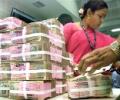
India Inc's deal making saw a sharp decline in 2009 with just $24 billion worth of mergers and acquisitions and private equity deals taking place, but 2010 is likely to be a year of "opportunity," according to a report by a consultancy firm.

A total of 635 companies have declared their third-quarter results and reported 22 per cent rise in revenue and 47.3 per cent growth in net profit on an average.

Assocham estimates offices are facing staff crunches of 15 to 25 per cent with the various strains of fever.
India Inc is unfazed by the sharp fall of the rupee against the greenback as most big firms have already hedged their foreign exchange exposures.

The issue regarding remuneration of company CEOs will be debated by the parliamentary standing committee.
India Inc seems to be doing a good job of protecting investors' interests following a crackdown by the market regulator earlier this year, as the number of complaints relating to non-receipt of refunds and allotment letters have nearly halved.

With the rupee showing a freefall and hitting a 28-month low against the dollar, India Inc has yet another headache.

Major Indian automobile companies like Tata Motors, Bajaj Auto and Mahindra & Mahindra seem to have put up a robust performance in Q3 FY 10, paying advance tax of Rs 100 crore (Rs 1 billion), Rs 320 crore (Rs 3.2 billion) and Rs 195 crore (Rs 1.95 billion), respectively.

Green shoots evident, but worries remain.

The drop in growth rate is subsequent to the corporate sector cutting investments by nearly Rs 90,000 crore (Rs 900 billion) in 2011-12 compared to 2010-11, according to the pre-Budget Economic Survey tabled by Finance Minister P Chidambaram in Parliament on Wednesday.
